
Internet connectivity has become essential for communication, business, education, and entertainment. However, many users in Pakistan frequently experience internet latency issues, which can affect activities like online gaming, video calls, cloud applications, and financial transactions.
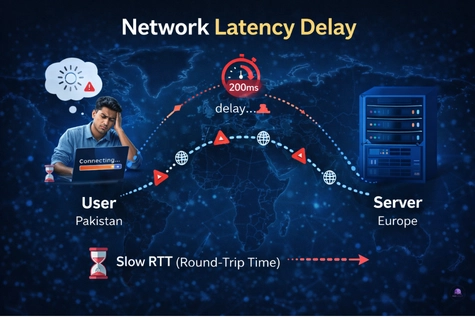
Latency refers to the delay between a user sending a request over the internet and receiving a response from the server. Even when internet speeds appear fast, high latency can cause slow loading websites, lag in online games, and interruptions in real-time communication.
This article explains what internet latency is, why it occurs in Pakistan, and what solutions could improve internet performance across the country.
What Is Internet Latency?
Internet latency is the time it takes for data to travel from a user’s device to a server and back. It is usually measured in milliseconds (ms).
Lower latency means faster communication between devices and servers, which is important for real-time applications such as:
- Online gaming
- Video conferencing
- Cloud services
- Voice calls
- Live streaming
For example, a latency of 20–40 ms is considered excellent for gaming and communication, while 100 ms or higher may cause noticeable lag.
Why Internet Latency Matters
Latency has a direct impact on user experience and digital productivity.
Online Gaming
High latency causes lag, delayed player actions, and inconsistent gameplay performance.
Video Calls and Remote Work
During video meetings, latency can create audio delays, frozen screens, and poor synchronization, making communication difficult.
Cloud Applications
Businesses using cloud-based tools rely on fast responses from remote servers. High latency slows down workflows and reduces efficiency.
Financial Transactions
Online banking and fintech services require fast and secure data transmission. High latency can delay payment confirmations and transaction processing.
Major Causes of Internet Latency Issues in Pakistan
Several infrastructure and technical factors contribute to latency problems across Pakistan.
1. Limited International Bandwidth
Pakistan relies heavily on submarine fiber optic cables to connect with global internet infrastructure. When these cables experience congestion or outages, international traffic becomes slower.
Some major submarine cables connecting Pakistan include:
If one cable experiences damage or maintenance issues, traffic must be rerouted through other routes, increasing latency.
2. Distance From Global Data Centers
Many popular online services host their servers in foreign data centers, often located in regions such as:
- Europe
- Singapore
- Middle East
- United States
When Pakistani users access these services, data must travel long distances, increasing response time.
Local data centers can significantly reduce latency by hosting services closer to users.
3. Network Congestion
Internet service providers (ISPs) sometimes face heavy traffic loads during peak hours.
Common causes include:
- streaming video platforms
- large file downloads
- gaming traffic
- social media activity
When networks become congested, packets of data must wait longer to be transmitted, increasing latency.
4. Inefficient Routing
Sometimes internet traffic takes longer routes across multiple networks before reaching its destination.
This inefficient routing can occur due to:
- poor network optimization
- limited peering agreements between ISPs
- outdated infrastructure
Optimizing routing paths can significantly improve response times.
5. Outdated Infrastructure
Some areas in Pakistan still rely on older technologies such as copper-based broadband lines, which are slower and less reliable than modern fiber-optic networks.
Fiber-optic infrastructure offers:
- higher bandwidth
- lower latency
- better reliability
Expanding fiber networks nationwide is crucial for improving internet performance.
6. Wireless Network Limitations
Many users depend on mobile networks for internet access.
While mobile internet is convenient, it can introduce latency due to:
- signal interference
- network congestion
- tower distance
Improving mobile infrastructure and expanding 4G and 5G coverage can reduce these delays.
Impact of Internet Latency on Pakistan’s Digital Economy
Internet latency does not only affect individuals-it also impacts businesses and national economic growth.
IT and Freelancing Industry
Pakistan has a large freelancing workforce providing services to international clients. High latency can slow down collaboration tools, cloud services, and remote development environments.
Online Gaming Community
Pakistan’s gaming community continues to grow rapidly, but high latency often forces players to connect to distant servers, leading to poor gaming performance.
Digital Commerce
E-commerce platforms depend on reliable internet performance for transactions, order processing, and customer support.
Software Development
Developers working with global cloud infrastructure need low latency connections to ensure efficient workflows.
Possible Solutions to Reduce Internet Latency in Pakistan
Improving internet latency requires coordinated efforts from telecom operators, government agencies, and technology companies.
Expand Submarine Cable Connectivity
Adding more undersea cables can increase bandwidth and reduce congestion.
Additional cable routes also improve redundancy, ensuring stable connectivity even if one cable fails.
Develop Local Data Centers
Building more local data centers allows global companies to host services closer to Pakistani users.
Major technology companies such as Amazon, Google, and Microsoft are expanding regional cloud infrastructure worldwide.
Encouraging such investments in Pakistan could significantly reduce latency.
Improve Internet Exchange Points (IXPs)
Internet Exchange Points allow local networks to exchange traffic directly rather than routing it through international networks.
Strengthening IXPs in cities such as:
- Karachi
- Lahore
- Islamabad
can improve local data routing and reduce delays.
Upgrade Fiber Infrastructure
Expanding fiber-optic broadband networks across urban and rural areas can reduce latency significantly.
Fiber connections offer faster and more reliable data transmission compared to legacy technologies.
Deploy Edge Computing
Edge computing involves placing computing resources closer to users.
This approach can improve performance for applications such as:
- streaming services
- gaming platforms
- AI-powered services
Edge computing reduces the distance data must travel, lowering latency.
Better Network Optimization
Internet service providers can improve latency by optimizing network routing and upgrading core infrastructure.
Modern network technologies such as software-defined networking (SDN) can dynamically select faster data routes.
Future Outlook for Internet Connectivity in Pakistan
Pakistan’s internet infrastructure is gradually improving due to increased investment in digital connectivity.
Key developments include:
- expansion of fiber networks
- new submarine cable projects
- improved mobile broadband coverage
- growing interest in local data center development
If these initiatives continue, internet latency issues in Pakistan could significantly improve in the coming years.
Conclusion
Internet latency issues in Pakistan stem from a combination of infrastructure limitations, international bandwidth constraints, and network congestion. These challenges affect online gaming, cloud computing, remote work, and digital services across the country.
However, solutions such as expanding submarine cables, developing local data centers, upgrading fiber networks, and improving internet exchange points can reduce latency and enhance connectivity.
As Pakistan continues to invest in digital infrastructure, addressing latency challenges will play a crucial role in supporting the country’s growing digital economy and improving internet experiences for millions of users.
Daily Update keeps you informed, every day.